Used bagpipes buyer guide
A practical, step-by-step checklist to evaluate second-hand instruments, check authentic makers and steer clear of tourist wall-hangers.
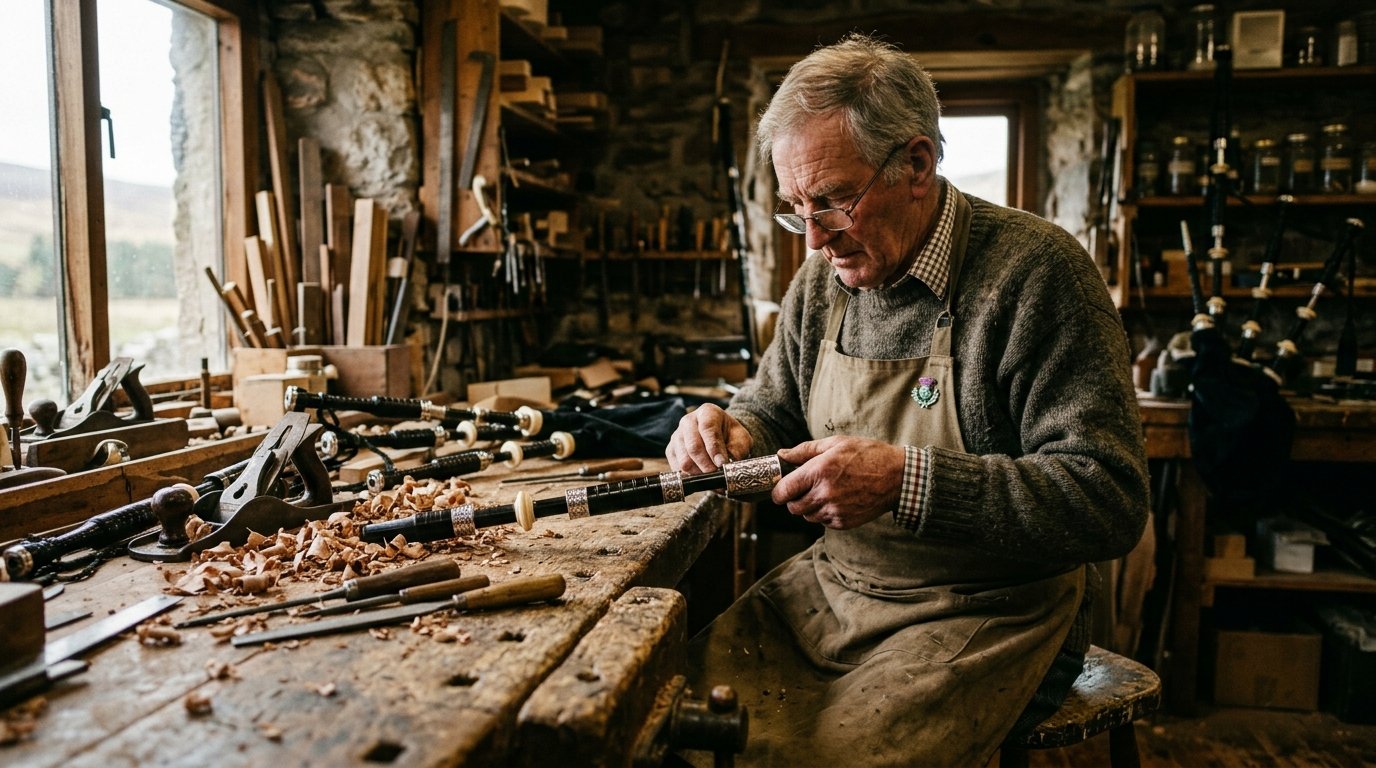
Purchasing a pre-owned set of Great Highland Bagpipes is one of the smartest ways to acquire premium African Blackwood pipes for $800 to $1,300 (£650 to £1,050) instead of paying upwards of $2,000 for brand new sets. The three non-negotiable rules: insist on an established Scottish or North American maker (McCallum, Hardie, Shepherd, Dunbar, Naill, Henderson), shine a torch over every female stock joint to spot hairline cracks caused by over-hemping, and perform a 60-second airtightness pressure test on the bag.
1. Why buy a used set of pipes?
African Blackwood (Dalbergia melanoxylon) is an unusually dense and stable musical timber. Unlike stringed instruments that can suffer fatigue or warp under tension, a well-cared-for set of bagpipe drones does not degrade with time. In fact, seasoned pipes played regularly over decades often boast richer harmonics and settled wood stability.
For beginners and intermediate pipers, buying used delivers top-tier craftsmanship at the price of entry-level gear. However, because Highland pipes rely on pneumatic pressure and intricate joints, an informed inspection is crucial to avoid inheriting costly repairs such as cracked stocks, leaking bags or seized slides.
2. The 8-point physical inspection checklist
When inspecting an instrument in person or asking for detailed photographs, systematically review these eight areas:
-
Hairline cracks in the timber:
Examine every piece of wood under strong, directional light. Check the drone stocks where they enter the bag grommets, and inspect the female drone slides beneath the ferrules (metal or imitation ivory rings). Cracks almost always originate when previous owners applied too much hemp cord and forced joints together (over-hemping), splitting the outer wood wall. -
Tuning slides and hemp condition:
Pull every drone slide apart. The bores inside must be smooth, clean and dry. When assembled, the slides must adjust with firm, steady resistance without binding or wobbling. Loose slides only need fresh waxed hemp, but seized slides indicate wood swelling from unmanaged moisture. -
Pipe bag airtightness test:
Insert airtight rubber or cork stoppers into all three drone stocks and the chanter stock. Blow into the blowpipe until the bag is completely inflated and firm under your arm. Hold it for 60 seconds. If the bag visibly softens or deflates, air is escaping through stitching, a degraded rubber membrane or leaking stock grommets. -
Bag type (Hide vs zipper synthetic/hybrid):
Identify the bag construction:- Synthetic or hybrid zipper bag (Canmore, Bannatyne): ideal for modern pipers. The airtight zipper allows you to inspect interior connections, wipe condensation and install moisture canisters.
- Traditional leather or hide bag (without zipper): requires regular application of liquid seasoning to stay airtight. If a hide bag has sat in an attic or closet for several years, the leather becomes brittle like dry cardboard and must be replaced (budget $140 to $220).
-
Blowpipe non-return valve:
Inhale gently through the blowpipe mouthpiece: the internal valve must seal instantly and prevent air from coming backward. If air flows freely, the flapper valve is worn, stiffened or missing. Modern replacements (such as a Moose valve or Lil Mac valve) cost $15 to $25 and are simple to press into the stock. -
Pipe chanter integrity and maker mark:
Confirm the chanter bears a reputable maker stamp. Inspect the finger holes: they must have sharp, crisp, factory-machined edges. Avoid chanters whose tone holes have been gouged out with a knife or round file by an amateur attempting to raise pitch. -
Drone reeds included:
Check the drone reed seats. A beginner-friendly used set should include reliable synthetic drone reeds with plastic or composite bodies (such as Ezeedrone, Selbie, Kinnaird or Balance Tone). If the pipes only contain moldy cane reeds, plan to purchase a brand-new set of synthetic drone reeds ($90 to $120). -
Carrying case and accessories:
A solid foam or hard case protects your timber against climate shock and physical drops. Look for handy extras included in the sale: stock stoppers, drone adjustment keys, yellow waxed hemp spools, and a protective chanter cap.
3. Historic vs modern pitch (440 Hz vs 480 Hz)
One of the most frequent surprises for new buyers is the evolution of Highland bagpipe pitch over the past half-century.
Pipes made prior to the late 1980s were pitched significantly lower, around 448 Hz to 460 Hz (close to concert B-flat). In contrast, all modern pipe bands and solo competitions play between 476 Hz and 482 Hz.
If you fall in love with a vintage set from the 1950s, 60s or 70s:
- The drone woodwork is magnificent and will tune comfortably across standard ranges by setting modern synthetic drone reeds appropriately.
- However, the original wooden pipe chanter will be too flat to play alongside other modern pipers. Simply set the original chanter aside and fit a modern plastic pipe chanter (McCallum, Hardie, Shepherd or G1, costing roughly $150) into your chanter stock.
4. How to identify unplayable tourist copies
Online marketplaces (eBay, Craigslist, Facebook Marketplace) are flooded with listings advertising "brand new complete bagpipes" for $100 to $250. These are ornamental souvenirs manufactured in Pakistan from cheap furniture wood.
They cannot be tuned or played by any piper or teacher:
| Feature | Authentic Highland bagpipe | Decorative tourist replica (avoid) |
|---|---|---|
| Wood species | African Blackwood (heavy, dark, oily timber) or dense Polypenco acetal. | Stained Sheesham (rosewood), lightweight, fibrous and porous. |
| Mounts and ferrules | Cleanly turned nickel alloy, engraved brass, or machined imitation ivory. | Paper-thin cast white plastic with visible molding seams and sharp flashings. |
| Maker stamping | Hallmarked or laser-engraved with maker name (e.g. McCallum, Naill, Hardie). | Completely sterile, no maker name, accompanied by generic terms like "Royal Stewart bagpipe". |
| Cover and cords | Thick velvet, corduroy or heavy wool with non-slip patches and durable drone cords. | Shiny synthetic nylon tartan with unraveling loose fringe threads. |
| Supplied reeds | Named commercial reeds (Ezeedrone, Selbie, Chesney, G1). | Cheap colored plastic tubes with non-functional tongues and rough cane strips. |
5. Ready-to-copy message template for online sellers
Before driving out or sending money, copy and paste this concise query to qualify the seller and filter out non-playable instruments:
I am interested in your bagpipe listing. Could you please clarify a few technical points:
1. What is the maker name engraved on the chanter or drone stocks?
2. Are there any visible hairline cracks in the wood, especially below the metal or plastic rings?
3. What kind of bag is installed (traditional leather or a zipper synthetic like Canmore/Bannatyne)?
4. Does the bag stay inflated and airtight if you stop the drones?
5. What type of drone reeds are included (synthetic reeds or cane)?
Thank you for your time!"
A genuine piper or family member with an authentic instrument will answer these questions readily. Evasive answers or lack of maker marks usually indicate a decorative ornament.
6. Fair market price guide
Current realistic price ranges for well-maintained pre-owned instruments:
| Category | Average pre-owned price | Expectations and setup costs |
|---|---|---|
| Polypenco pipes Makers: McCallum P0/P1, Dunbar, RG Hardie |
$500 to $750 (£400 to £600) | Virtually indestructible. Great for outdoor gigs and cold weather. Just add fresh reeds and hemp. |
| Standard African Blackwood Makers: McCallum AB1/AB2, Shepherd, Wallace |
$800 to $1,400 (£650 to £1,100) | The sweet spot for amateur and band pipers. Deep acoustic resonance and solid resale value. |
| Vintage prestige pipes Makers: Peter Henderson, Donald MacDougall, Lawrie, David Naill |
$1,600 to $3,500+ (£1,200 to £2,800+) | Soloist instruments and heritage collector pieces. Verify modern chanter pairing and ferrule silverwork. |

Yellow waxed hemp cord
Whenever you bring home a used set of pipes, stripping away old, grime-caked hemp and winding fresh waxed hemp onto slides and stock tenons is the first step toward rock-solid stability and air retention.
For beginners, explore our practice chanter beginner guide and try our free online 476 Hz live microphone bagpipe tuner.
7. Frequently asked questions (FAQ)
Can I try the pipes if I have never played before?
If you do not know how to maintain steady arm pressure, you will not be able to get a proper continuous sound. Always ask the seller to play the pipes for you so you can hear the drones tune in unison without wavering. If the seller does not play, invite an experienced piper from a local pipe band to accompany you.
Should I choose Polypenco or Blackwood for my first used set?
If you are on a tighter budget or plan to march outdoors in rain or cold, Polypenco is virtually carefree: it will never crack from humidity shifts and needs zero bore oiling. If you seek classic acoustic depth, traditional aesthetics and top resale value, African Blackwood is the standard choice.
What immediate setup costs should I expect after buying?
Budget roughly $20 for a fresh pipe chanter reed matched to your blowing strength, $10 for a roll of waxed hemp, and up to $100 for a fresh set of synthetic drone reeds if the existing reeds are worn out.